What does trauma mean?
“Trauma” is a term that refers to a human response to an event or experience built into our biology to help keep us safe. This survival response is a natural occurrence all throughout nature. Trauma experiences can be a variety of incidents like: a car accident, natural disaster, loss of a loved one, illness, verbal abuse, physical abuse, abandonment, and so much more. Unresolved trauma is a public health issue.
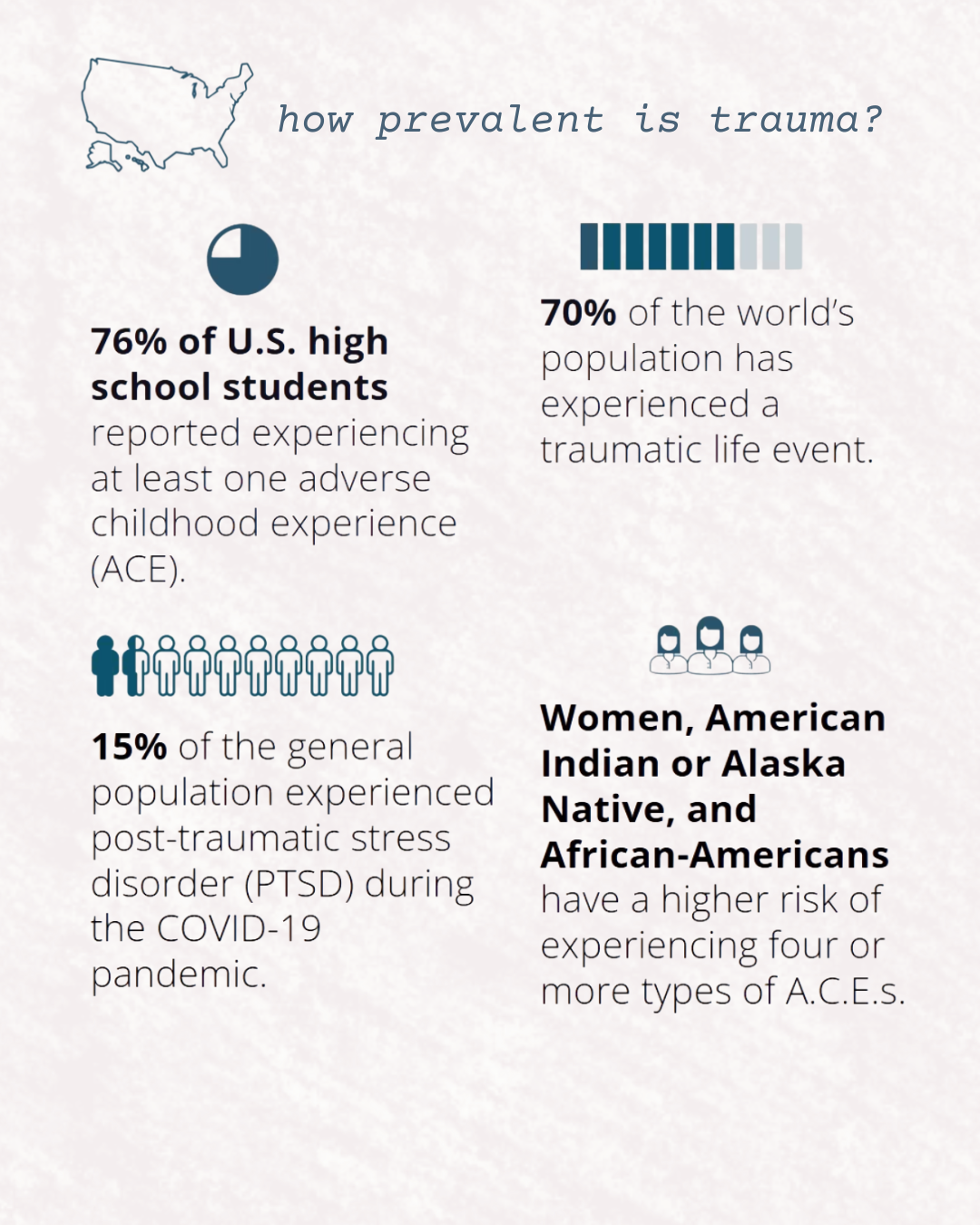
- 76% of high school students have adverse childhood experience (ACE)
- 70% of the world’s population have experienced trauma
What does it mean to be trauma-informed?
It means to be aware of the trauma that has taken place and provide safety and agency. Approaching a person who has experienced trauma with sensitivity and empathy is called “trauma-informed care,” and trauma-informed storytelling provides safety and resists harm.
Having trauma-informed care in your marketing toolkit will help benefit your organization and show up for the community and become a more compassionate leader.
In the work we offer at Transcend Ideas, much of our position in strategy, copywriting, supportive graphics, and video/audio storytelling is informed with care and consideration of the person sharing their story. Some of the clients we support have sensitive testimonies or stories that must be handled with great consideration and compassion. Privacy, anonymity, and confidentiality are all factored into the decisions we make and how we craft the stories we share to the public at large. Here are a few ways to stay trauma-informed:
Assess story readiness
Establish goals and outcomes you’d like to achieve when capturing this story, assess the emotional stability, and ensure there is a support system in place. Trauma-informed care is providing safety and agency for the storyteller.
Have consent conversations
Explain when and where the story will appear and offer review or revision. Never assume consent extends to future use.
Remember closed stories are safer stories
When sharing impactful stories, it’s always safer to feature people not currently in crisis. Shift the focus on what has changed and improved, acknowledging the past without dwelling on it.
Set funder expectations and ethical storytelling
To motivate giving, center the impact and not the trauma itself or the graphic details. When you focus on the transformation and the growth and align with the funders values. Prior to providing testimonials ask how the stories might be used internally or shared publicly.
Takeaways:
- Lead with care, slow down the storytelling process
- Tell stories with the same respect you’d like yourself
- Protect storytellers even when no one is watching
- No exploitative stories
- Alternatively use composite stories using themes from real life with no identifiable names
Learn more at Trauma-Informed Messaging – MariaBryan.com